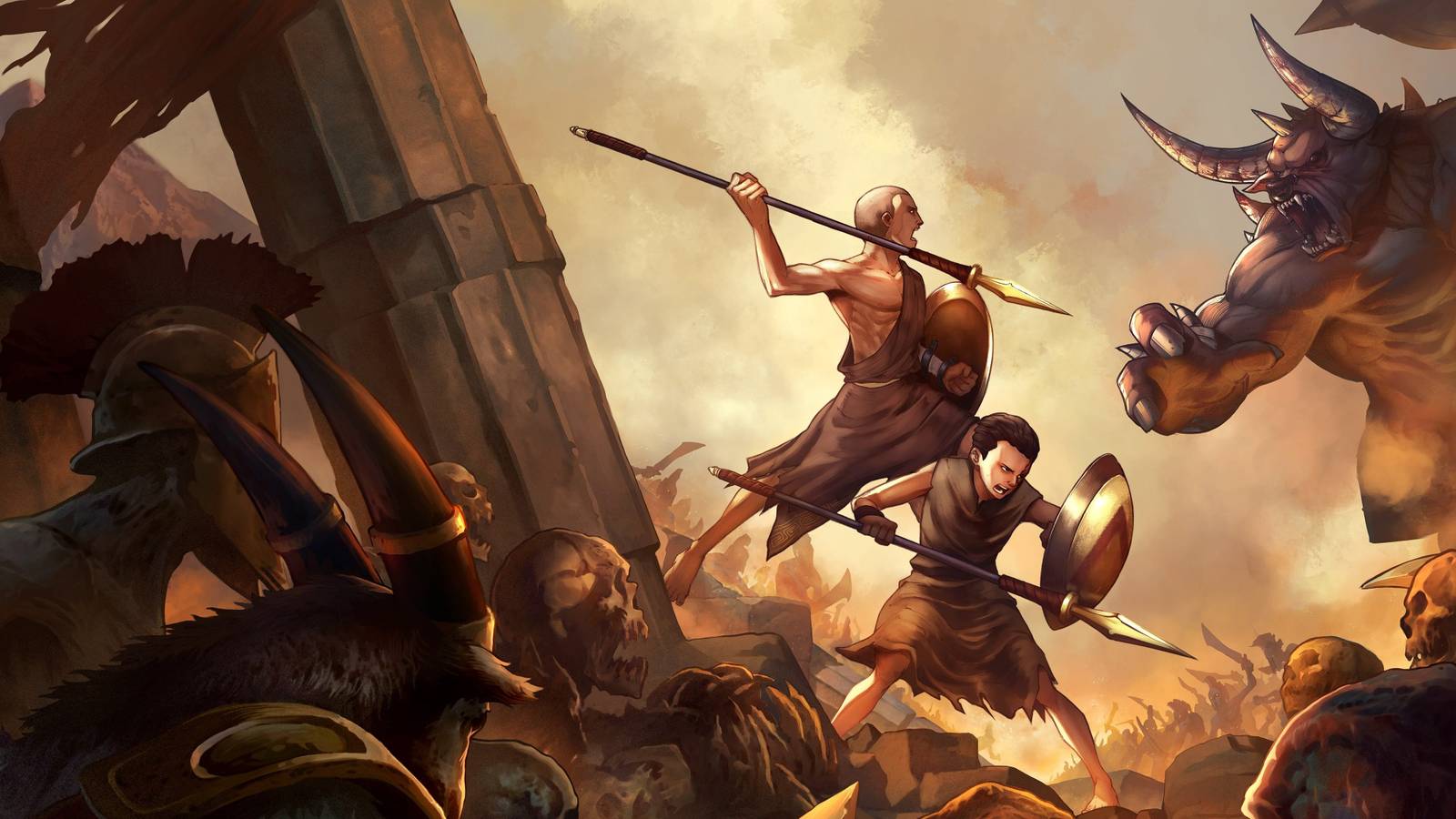
God of War: Sons of Sparta - A Solid, Unexcelling Metroidvania
Step back in time to the formative years of the Ghost of Sparta with
God of War: Sons of Sparta, a captivating Metroidvania spin-off developed by Mega Cat Studios. This intriguing prequel takes a different path from the bombastic, god-slaying sagas we've come to expect, offering a glimpse into Kratos's youth alongside his brother Deimos. While it adeptly captures the mythical essence of the God of War universe, our comprehensive
Sons Of Sparta Review reveals a game that, despite its well-crafted elements, doesn't quite ascend to the pantheon of Metroidvania greats. It's a title that knows its identity and executes it with competence, yet rarely ventures beyond the conventional.
A Different Kratos, A Familiar Mythos
Forget the muscle-bound, rage-fueled Kratos who single-handedly tears down Olympian gods. In
Sons of Sparta, we encounter a significantly younger, barely double-digit-aged Kratos, still earning his stripes within the Spartan hierarchy. This narrative choice fundamentally shifts the game's tone and stakes. Gone are the grandiose, world-ending conflicts; in their place, we find a more intimate, almost "Hardy Boys" style adventure.
Kratos here is portrayed as the quintessential "bratty Spartan rules nerd," meticulously adhering to warrior teachings and leveraging them to justify his actions. His brother, Deimos, serves as a compelling foil: headstrong, passionate, and prone to following his heart, often literally, which conveniently provides reasons for Kratos to explore solo before their eventual reunions in cutscenes. This dynamic forms the core of the game's narrative, guiding them on quests like tracking a missing Spartan student through the murky sewers, a far cry from challenging Ares himself.
Developer Mega Cat Studios has done a commendable job in ensuring that despite this tonal shift and the youth of its protagonists, the mythical flavor remains intact. You'll still encounter iconic creatures like cyclops from the get-go, though the initial combat encounters may leave you shrugging rather than roaring with adrenaline. This prequel cleverly uses its lower stakes to explore character development and world-building that the main series, with its larger-than-life battles, often couldn't afford. For a deeper dive into the narrative and character dynamics, check out our companion piece:
God of War Sons of Sparta: Young Kratos's Hardy Boys Adventure.
Combat: A Mixed Blade of Sparta
The combat system in
God of War: Sons of Sparta presents a fascinating paradox. Early hours with the game can be somewhat jarring. Kratos's movements feel floaty and slow, and both player and enemy animations are clunky, leading to early encounters – such as the first cyclops – feeling more like a chore than a thrilling mythological clash. The visceral bombast synonymous with the God of War series is noticeably absent in these initial stages.
However, as the game progresses, the combat truly begins to shine and morph into something far more engaging. The complexity is primarily introduced through a unique color-coded system that demands strategic thinking:
*
Red Attacks: Unblockable, requiring a dodge.
*
Blue Attacks: Undodgeable, necessitating a block.
*
Yellow Attacks: Must be parried with precise timing.
*
Purple Attacks: Demand complete avoidance.
Additionally, enemies can possess aura shields glowing in specific colors, which must be negated with corresponding spirit or magic attacks. While this system undeniably adds layers to each encounter, it can initially feel like a rote test of matching responses rather than a fluid, natural combat flow. On normal difficulty, the stakes aren't incredibly high, preventing the color matching from becoming overly punishing, especially given that many early enemies tend to "grumble and barely react before inelegantly flopping to the floor."
Despite these initial hurdles, the game's combat encounters become more enthralling as you progress, with enemies unleashing a wider variety of attacks that demand a deeper understanding of the evasion mechanics. New abilities expand Kratos's offensive arsenal, adding further depth. While the stun meter allows for gory finishing moves, these animations, unlike those found in titles like
Blasphemous or
The Last Faith, often feel dull and weightless, lacking the impactful brutality one might expect.
Practical Tip for Mastering Combat: Focus on internalizing the color-coded system as early as possible. Treat it less as a memory test and more as a rhythm game. Anticipate enemy attack tells and develop muscle memory for the correct response. Prioritize upgrading abilities that offer new ways to counter specific colored attacks or enhance your spirit/magic options for breaking aura shields. Don't be afraid to experiment with your growing arsenal as new skills are acquired; they are often key to transforming initially frustrating encounters into satisfying victories. For a detailed breakdown of these mechanics, explore our
Sons of Sparta Combat Review: Kratos's Color-Coded Battles.
Metroidvania Mechanics: Solid Foundations, Uninspired Heights
As a Metroidvania,
God of War: Sons of Sparta builds upon well-established genre conventions. The world design features interconnected pathways that pleasingly spiral out from Sparta at the center, creating a cohesive, explorable map. This traditional structure is one of the game's undeniable strengths, offering a sense of gradual progression and discovery as new abilities unlock previously inaccessible areas.
However, the execution of some core Metroidvania elements has its drawbacks. Each screen can be quite large, sometimes causing the action to get lost amidst the expansive backdrops. While the platforming and puzzles benefit from a tight and thoughtful design, they rarely innovate or push the boundaries of the genre. They are competent, functional, and serve their purpose effectively, but won't likely leave a lasting impression of ingenuity.
The art direction, while fitting for the mythical setting, is another area where the game falls into the "competent but uninspiring" category. The visuals adequately convey the ancient Greek aesthetic but lack a distinctive artistic flair or memorable style that would make them stand out amongst other indie Metroidvanias. Furthermore, players might notice a degree of repetition in enemy design, which, coupled with a conservative skill tree, prevents the game from fully transcending its solid foundations to achieve truly exceptional status within the crowded Metroidvania landscape. While the level design is strong, the lack of significant enemy variety or a more dynamic skill progression contributes to a feeling of conventionality.
Conclusion: A Worthy, Yet Unexcelling, Spartan Outing
Our
Sons Of Sparta Review concludes that
God of War: Sons of Sparta is a well-designed and solid Metroidvania that successfully carves out its own niche within the colossal shadow of its mainline counterparts. It delivers a unique narrative perspective on a young Kratos, coupled with a combat system that, while initially clunky, evolves into an engaging, strategically demanding experience thanks to its color-coded mechanics. The tight level design and thoughtful puzzles provide a rewarding sense of exploration and progression.
However, the game ultimately remains a conventional Metroidvania. Its uninspired art direction, repetitive enemy models, and conservative skill tree prevent it from truly soaring to the mythic heights of the series or standing out as a groundbreaking title within its genre. It never truly excels in any exceptional way, content instead to be a well-crafted, albeit familiar, entry. For fans of Metroidvanias seeking a competent and enjoyable adventure, or God of War enthusiasts curious about Kratos's early exploits,
Sons of Sparta offers a strong outing. Just temper your expectations; while it's a worthy addition to the sprawling saga, it remains firmly grounded in its role as a solid, unexcelling Metroidvania.