The Genesis of a God: Young Kratos's Unfamiliar Beginnings
Stepping into God of War Sons of Sparta is an experience unlike any other for fans of the iconic Spartan warrior. This prequel adventure, developed by Mega Cat Studios, throws players into the sandals of a Kratos far removed from the grizzled, god-slaying behemoth we've come to know. Instead, we encounter a pre-teen Kratos, barely past his double-digit age, alongside his younger brother, Deimos. Our initial dive into this retro-style Metroidvania reveals a bold departure, attempting to mark off the necessary boxes for mythical flavor, yet often with a peculiar clumsiness that defines much of the early gameplay.
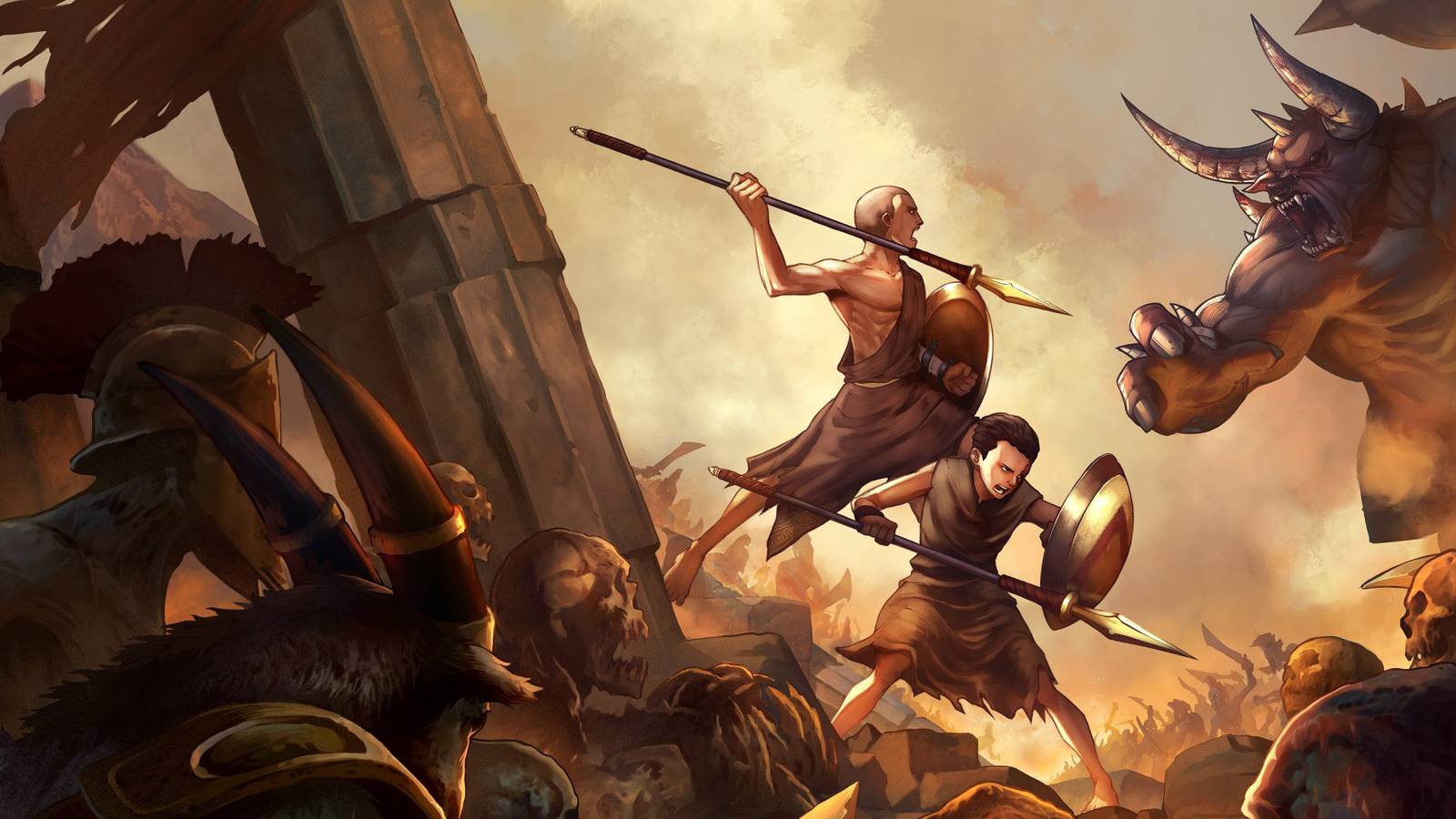
From the outset, the game makes it clear this isn't the bombastic, adrenaline-fueled spectacle synonymous with the main series. Within moments, young Kratos and Deimos are thrust into battle against a massive cyclops. While the spectacle of siblings facing a mythical beast is fitting for the franchise, the execution leaves much to be desired. The combat feels surprisingly floaty and slow, a stark contrast to the weighty, impactful strikes Kratos is famous for. Player and enemy animations are clunky and, at times, downright ugly, making what should be an epic struggle feel more like a clumsy dance. When the cyclops finally keels over, the expected rush of triumph is replaced with a shrug, leaving a void where the characteristic God of War adrenaline should be. This initial impression sets a curious tone for our Sons Of Sparta review, as it highlights a game grappling with its identity within a legendary lineage.
This early awkwardness, however, isn't entirely without narrative justification. Kratos and Deimos are fresh off earning their Spartan right to venture beyond the city walls, mere boys proving their mettle. Their inexperience is mirrored in the gameplay's less refined mechanics, perhaps intentionally. It’s a bold choice to portray the burgeoning warrior in such an unpolished light, forcing players to readjust their expectations of Kratos’s early prowess.
Beyond Olympus: A "Hardy Boys" Narrative in Ancient Sparta
One of the most striking aspects of God of War Sons of Sparta is its narrative tone, which diverges sharply from the grand, cataclysmic stakes of the mainline series. Rather than world-ending conflicts, this prequel embraces a more intimate, localized adventure, best described as a "Hardy Boys" mystery set against the backdrop of Ancient Sparta. The initial quest, for instance, involves Kratos and Deimos tracking a missing fellow Spartan student through the grimy sewers, following a trail of fur. It’s a grounded, almost mundane premise compared to slaying gods, but it lends the game a unique charm.
The sibling dynamic is central to this narrative shift. Kratos, surprisingly, is depicted as a "bratty Spartan rules nerd." He meticulously adheres to warrior teachings, often leveraging them to justify his actions, even when they seem self-serving. Deimos, on the other hand, is headstrong and passionate, often letting his heart lead him into trouble. This dynamic creates natural reasons for exploration: Deimos might impulsively run off, forcing Kratos to navigate areas solo before they reunite in cutscenes. This contrast not only provides character depth but also informs the game's Metroidvania-style design, with interconnected pathways spiraling out from Sparta, each segment of the map pleasingly flagged as they connect.
The lower stakes are a refreshing change of pace, allowing players to experience a different facet of Spartan life and the formative years of its most infamous warrior. It's a prequel that prioritizes character development and world-building on a smaller scale, inviting players to witness the subtle origins of Kratos's legendary stoicism and strategic mind. While it might not fulfill the hunger for epic confrontations, this narrative choice offers a compelling glimpse into the boys who would one day shake the foundations of Olympus.
Navigating Sparta's Interconnected Labyrinth
The Metroidvania design of Sons of Sparta encourages exploration, with a world that gradually unfurls as Kratos and Deimos gain new abilities. Each screen is quite large, which, while offering a sense of scale, sometimes makes the action feel lost within the expansive environments. Players will find themselves backtracking and uncovering hidden paths, a core tenet of the genre. However, the satisfaction of discovery can be hampered by a somewhat unsatisfying sense of movement and jumping. Kratos's early agility doesn't quite match the expansive level design, leading to moments where navigating the environment feels more like a chore than an exhilarating adventure.
Spartan Combat: Mastering the Color-Coded Gauntlet
The combat system in God of War Sons of Sparta is arguably its most distinct feature, moving beyond simple blocking and mashing attacks to introduce a color-coded damage evasion system. This mechanic, while adding a layer of strategic thinking, can also feel like a rigorous test of memorization rather than a natural flow of battle. Our in-depth Sons of Sparta combat review highlights the complexities:
- Red Attacks: These are unblockable and demand a timely dodge.
- Blue Attacks: These cannot be dodged and require a precise block.
- Yellow Attacks: The most challenging, these necessitate a perfectly timed parry to negate damage and often create openings.
- Purple Attacks: The most dangerous, these must be completely avoided, usually by getting out of the attack's area of effect.
Adding another layer, enemies frequently sport aura shields that glow specific colors, demanding either a spirit attack or a magic attack to negate them. While this system promotes tactical engagement, it can sometimes feel exhausting, transforming combat into a rote exercise of matching responses. Instead of a fluid, intuitive dance, it’s often a sequence of identifying colors and executing the corresponding defensive maneuver.
On normal difficulty, this system doesn't pose an insurmountable challenge, as most enemies merely grumble and barely react before flopping unceremoniously to the floor. There's a stun meter that, once filled, allows Kratos to execute finishing moves. While these result in satisfyingly gory blood splatter, the kill animations themselves are often dull, tame, and lack the impactful weight one might expect from a God of War title. Compared to the visceral, varied, and constant executions in games like Blasphemous or The Last Faith, Sons of Sparta falls short, leaving a sense of missed opportunity for truly brutal, memorable finishes.
Tips for Mastering Color-Coded Combat:
- Prioritize Defense: Until you're comfortable, focus on correctly identifying attack colors and responding defensively. Offense will follow naturally.
- Learn Enemy Patterns: While the color dictates the defense, knowing *which* enemies use *which* colored attacks will give you a precious split-second advantage.
- Conserve Spirit/Magic: Don't waste your special attacks on normal enemies. Save them for shielded foes that require them, or for when you need to burst down a tough enemy.
- Practice Parries: Yellow attacks are often the most rewarding to parry, frequently creating larger openings for counter-attacks. Dedicate time to mastering their timing.
A Metroidvania's Puzzles and Pitfalls
Beyond combat, God of War Sons of Sparta is a Metroidvania at its core, featuring tight and thoughtful design in its platforming and environmental puzzles. As Kratos and Deimos acquire new abilities, previously inaccessible areas become available, rewarding keen-eyed explorers. This aspect of the game is arguably where its design truly shines, offering well-crafted challenges that require both ingenuity and precise execution. The satisfaction of figuring out a complex environmental puzzle or navigating a perilous platforming section is genuinely earned.
However, the game doesn't quite escape some genre pitfalls. The art direction, while competent, can feel uninspiring. Environments, while structurally sound, often lack the vibrant detail or memorable aesthetic that elevates other titles in the genre. This can lead to a sense of visual repetition, making some areas blend together despite their unique layouts. Similarly, while new abilities do expand Kratos's offensive arsenal and add layers to combat, the skill tree itself is relatively conservative. It offers upgrades but rarely introduces truly transformative changes that significantly alter gameplay or offer deep customization, limiting the sense of progression and character building.
Enemy design also suffers from repetition. While later encounters do become more enthralling as enemies unleash varied attacks that demand specific evasion methods, the pool of unique enemy types isn't vast enough to prevent a feeling of déjà vu. This, combined with the conservative skill tree, prevents the game from truly excelling and rising above the "solid and well-crafted" label into something more legendary.
Verdict: Does Sons of Sparta Forge Its Own Legend?
Our Sons Of Sparta review concludes that this prequel is a well-designed, albeit conventional, Metroidvania that knows exactly what it wants to be. It provides a unique, lower-stakes glimpse into the formative years of Kratos and Deimos, offering a refreshing narrative departure from the main series' grandeur. The "Hardy Boys" tone and focus on sibling dynamics provide a compelling character study, while the Metroidvania structure delivers thoughtful platforming and puzzles.
Yet, it's a game of distinct highs and noticeable lows. The initial clunky combat and uninspired animations are a hurdle, even if the color-coded system eventually adds strategic depth. The repetition in enemy design and a conservative skill tree prevent it from truly reaching its full potential, and the finishing moves, while gory, lack the impact and variety of its more brutal contemporaries. While it certainly offers an engaging experience, particularly as the combat expands with new abilities, it never quite reaches the mythic heights of the God of War series. God of War Sons of Sparta is a strong outing for Kratos, a solid and enjoyable adventure that stands on its own merits, even if it doesn't redefine the genre or fully captivate in the way its namesake often does. It's a worthy detour for fans curious about Kratos's humble beginnings, but perhaps not an essential chapter for the uninitiated.